

Amaha / / / Psychologist vs Psychiatrist: What's the Difference and Who Should You Choose?
ARTICLE | 5 MINS READ
Psychologist vs Psychiatrist: What's the Difference and Who Should You Choose?
Published on
13th Apr 2026

Dr Vani Kulhalli
MD Psychiatry

Both psychologists and psychiatrists help people with mental health concerns, but their approaches and tools to help the client are different.
What is a Psychologist?
A Psychologist is a mental health professional with training in the study of human behavior, emotions, and thought patterns. In Hindi, we call them "मनोवैज्ञानिक" (manovaigyanik). Psychologists in India typically have a degree in Psychology and may further specialise in Clinical, counselling, Industrial and other areas.
To be able to help people independently, they should have at least a postgraduate degree in psychology, along with experience under supervision. Psychologists are trained to administer psychological tests that check factors like intelligence, emotional health, thought patterns, etc. They are trained to assess the person and their thought and behaviour patterns through careful history-taking. They help people identify difficulties, make decisions, implement decisions made by them and in general achieve their life goals.
Who is a Psychiatrist?
A psychiatrist, or "मनोचिकित्सक" (manochikitsak) in Hindi, is a Medical doctor who specialises in the treatment of mental illness using medical approaches. In India, Psychiatrists have to complete undergraduate medical training (MBBS) followed by 3 years of specialised training in a recognised medical institution to be recognised as psychiatrists for practice. Psychiatrists are trained in assessing the person’s difficulties from a ‘biopsychosocial’ perspective. It means they check the patient and find out the factors in the patient’s brain and body, surroundings and individual reactions to understand the occurrence of the disorder.
They are able to rule out medical conditions that cause behavioural problems and distress. They prescribe medications to manage the symptoms of mental disorders or as a support to psychotherapeutic treatments. They are also trained in the application of biomedical methods of treatment like electroconvulsive therapy and transcranial magnetic stimulation.

Get Flat 15% Off on First 3 Sessions - Limited Time Offer*
Find Top Psychologists and Psychiatrists under one clinic. Get Culture sensitive Care and Non-judgmental Science-backed Therapy at Amaha
Different Education Journeys
A Psychologist's Education:
- Complete a Bachelor's degree (usually in Psychology)
- Pursue a Master's in Psychology (2 years)
- Often complete MPhil or PhD
- Specialised training in counselling therapy approaches
- Supervised practical training
A Psychiatrist's Education:
- Complete MBBS (medical degree)
- Specialising in psychiatry through MD/DNB
- Medical residency training
- Can prescribe medications
- Understand biological and neurological aspects of mental health
What Does A Psychologist Do?
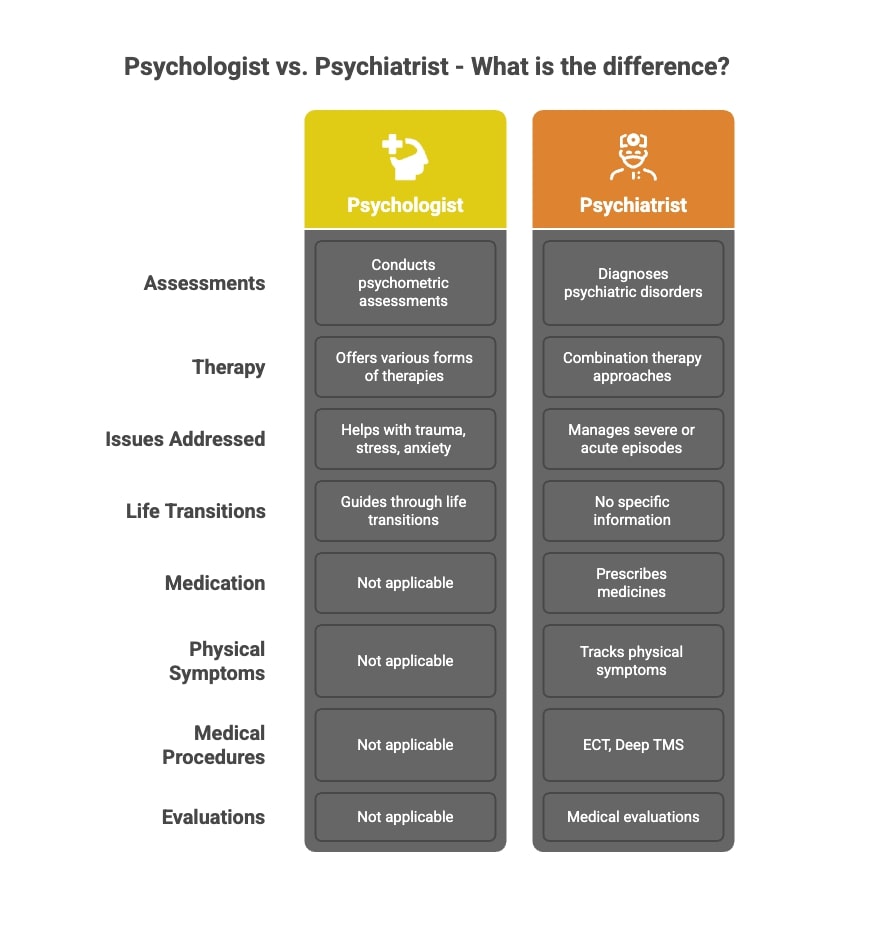
- Conduct psychometric assessments
- Offer cognitive behavioural therapy (CBT), Dialectical therapy, family therapy, even child therapy and other forms of therapies
- Help with issues like trauma, relationship stress, anxiety, self-esteem, and more
- Guide people through life transitions like breakups, grief, career confusion, parental stress, job loss, and divorce
What Does A Psychiatrist Do?
Psychiatrists combine medical knowledge with mental health expertise. Psychiatrists are doctors. They’ve studied medicine and then specialised in mental health.
They can:
- Diagnose psychiatric disorders like depression, bipolar disorder, schizophrenia, OCD, and ADHD
- Prescribe medicines such as antidepressants, antipsychotics, mood stabilisers, etc.
- Track physical symptoms linked to mental illness, like sleep issues, appetite changes, and fatigue
- Psychiatrists can also help manage severe or acute episodes where safety, medication, or hospitalisation might be needed.
Their toolkit includes:
- Medication management
- Medical evaluations
- Treatment of severe mental illnesses
- ECT, Deep TMS and other medical procedures
- Combination therapy approaches
The Science Behind Both Approaches
Psychology focuses on:
- Behavioral patterns
- Cognitive processes
- Environmental factors
- Learning and conditioning
- Social influences
Psychiatry emphasises:
- Neurochemistry
- Brain structure and function
- Genetic factors or hormonal factors
- Medical conditions affecting mood
- Pharmacological interventions
Therapy actually changes brain chemistry, too. It's not just "talk", it rewires neural pathways, also known as “neuroplasticity”. Neuroplasticity refers to the brain's capability to adapt and reorganise, rewire its neural pathways, enabling it to adapt and function in ways that are different from its prior condition.
Can A Psychologist And Psychiatrist Work Together?
Yes, and in most mental health setups, they do. Let’s say someone’s been feeling anxious and hopeless for weeks. A psychologist may first assess them, understand patterns, and offer therapy. If the distress is deep or linked to past trauma, they may suggest long-term psychotherapy. But if there’s insomnia, low energy, suicidal thoughts, or inability to function day-to-day, a psychiatrist may step in to evaluate if medication is needed.
That’s how recovery happens. At Amahat, we use our collaborative care model. You get access to self-care tools and community support on the Amaha app, psychometric assessments, Therapy sessions with psychologists, as well as medication support from psychiatrists and even inpatient services at the Amaha Hospital.
What's Better: Psychologist Or Psychiatrist?
Choose a Psychologist when:
- You want to talk through problems
- You're dealing with relationship issues
- You prefer non-medication approaches
- You have mild to moderate symptoms
- You want to develop coping skills
- You have been advised by your doctor or psychiatrist to see a therapist
Choose a Psychiatrist when:
- You suspect you might need medication
- You have severe symptoms
- You've tried therapy without sufficient improvement
- You have complex mental health conditions
- You want a medical evaluation
- You have been advised by your doctor or therapist to meet a psychiatrist
Many people benefit from starting with a psychologist. If medication becomes necessary, they can refer you to a psychiatrist while continuing therapy.
Taking that first step toward getting help. We recommend starting with a licensed therapist with a reputable organisation like Amaha and then letting them assess your situation to guide you through your recovery journey.
Your mental health matters. Choose the professional who feels right for your situation, and don't hesitate to switch if needed. After all, finding the right fit is part of the healing journey.

Temporary Sadness or Depression - Find out for Real
Find out how severe are your Symptoms. Is it just normal sadness or are you suffering from depression disorder?
Frequently Asked Questions
Can a psychologist prescribe medication in India?
No, psychologists cannot prescribe medication in India. Only psychiatrists, who are medical doctors, have the authority to prescribe psychiatric medications. However, psychologists can refer you to a psychiatrist if they believe medication might be helpful.
Is seeing a psychiatrist more expensive than a psychologist?
Generally, psychiatrist consultations tend to be more expensive than psychologist sessions in India, ranging from ₹1,500-₹3,000 compared to ₹1,000-₹2,000 for psychologists. However, costs vary significantly based on location, experience, and clinic type.
How do I know if I need therapy or medication for my mental health?
If you're experiencing mild to moderate symptoms like stress, relationship issues, or everyday anxiety, start with a psychologist. If symptoms are severe, interfering significantly with daily life, or if you've tried therapy without improvement, consider consulting a psychiatrist.
Can I see both a psychologist and a psychiatrist at the same time?
Yes, many people benefit from seeing both professionals simultaneously. This collaborative approach addresses both the medical and psychological aspects of mental health conditions, often leading to better outcomes.
What's the meaning of psychologist and psychiatrist in simple Hindi terms?
A psychologist is "मनोवैज्ञानिक" (manovigyanik) - someone who studies the mind and behaviour. A psychiatrist is "मनोचिकित्सक" (manochikitsak) - a medical doctor who treats mental health conditions with medicine and therapy.
What does a Psychologist mean in Hindi?
Psychologist का हिंदी में मतलब है "मनोवैज्ञानिक"।
मनोवैज्ञानिक वे विशेषज्ञ होते हैं जो व्यक्ति के विचारों, भावनाओं, व्यवहार और मानसिक प्रक्रियाओं को समझने और सुधारने में मदद करते हैं। वे बातचीत और थेरेपी के ज़रिए मानसिक समस्याओं का समाधान करते हैं, लेकिन दवाइयाँ नहीं देते।
What is Psychiatrist meaning in Hindi?
Psychiatrist का हिंदी में मतलब है "मनोरोग विशेषज्ञ"।
मनोरोग विशेषज्ञ एक मेडिकल डॉक्टर होते हैं जो मानसिक रोगों की पहचान कर सकते हैं और ज़रूरत पड़ने पर दवाइयाँ भी दे सकते हैं। वे गंभीर मानसिक स्थितियों जैसे डिप्रेशन, बायपोलर डिसऑर्डर या स्किज़ोफ्रेनिया का इलाज करते हैं।