

Amaha / / / Neurotherapy Treatment: Science-Based Path to Better Brain Health using Neurofeedback
ARTICLE | 6 MINS READ
Neurotherapy Treatment: Science-Based Path to Better Brain Health using Neurofeedback
Published on
10th Apr 2026

Parth Kalia
M.S. Clinical Mental Health Counseling
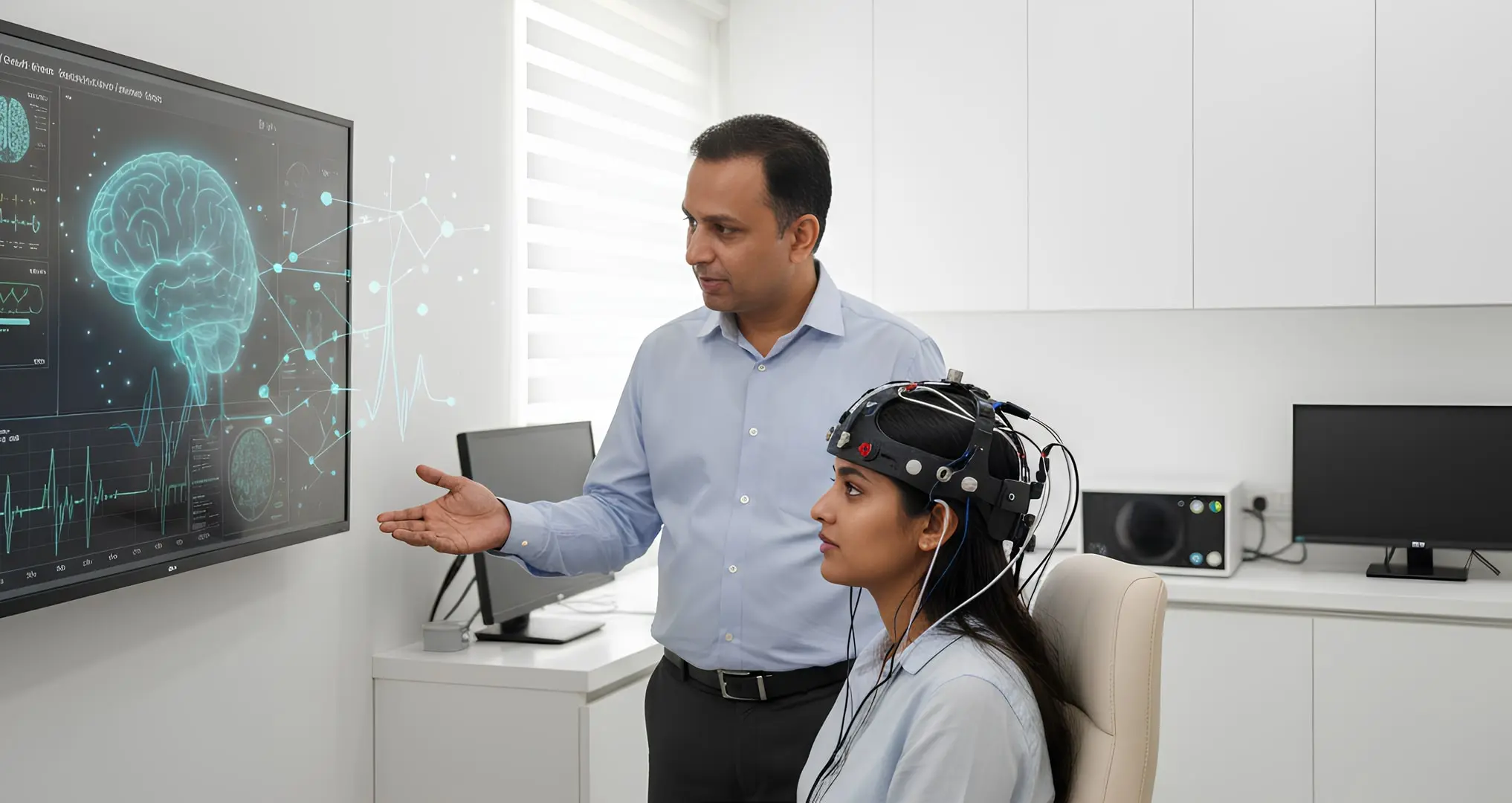
Our brain contains about 86 billion neurons. Neurotherapy is a scientifically backed method that can literally rewire your brain's patterns to help you think clearly, feel calmer, and perform better. Let's learn more about it.
The neurology devices market in India is projected to grow at a healthy 7.1% compound annual growth rate 1, and a lot of this growth is spurred by people exploring options like neurotherapy and neurofeedback.
What Actually Is Neurotherapy?
At its core, neurotherapy is a medical treatment that uses targeted energy or signals to alter and rebalance neuronal activity.
The neurotherapy meaning goes beyond just treatment; it's about education and correction. Your brain learns to recognise its own electrical activity patterns and gradually adjusts them for better performance.
The Science Behind How Neurotherapy & Neurofeedback Treatment Works
Neurotherapy hinges on a concept called neuroplasticity. The brain isn't a rigid, fixed organ. It's a dynamic, ever-changing complex organ. Neuroplasticity is the ability to reorganise itself by forming new neural connections in response to learning, experience, or even injury. This is the brain's superpower.
Your brain functions using brain waves, electrical patterns that tell a lot about your mental state. Neurotherapy treatment uses advanced EEG technology to monitor these brainwave patterns in real-time. You've got:
- Delta waves during deep sleep,
- Theta, when you’re sleepy or meditating,
- Alpha for a relaxed, calm state,
- Beta, when you’re focused and alert, and
- Gamma for when you're problem-solving.
In many neurological and psychological conditions, this delicate balance gets thrown off. For instance, people with ADHD often have too many low-frequency Theta waves and not enough high-frequency Beta waves in certain brain regions. People with depression may have an excess of Theta waves in their frontal lobes.
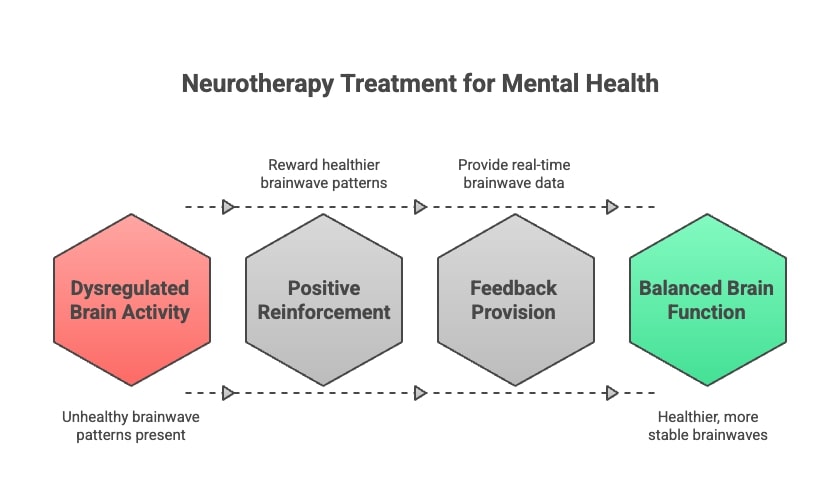
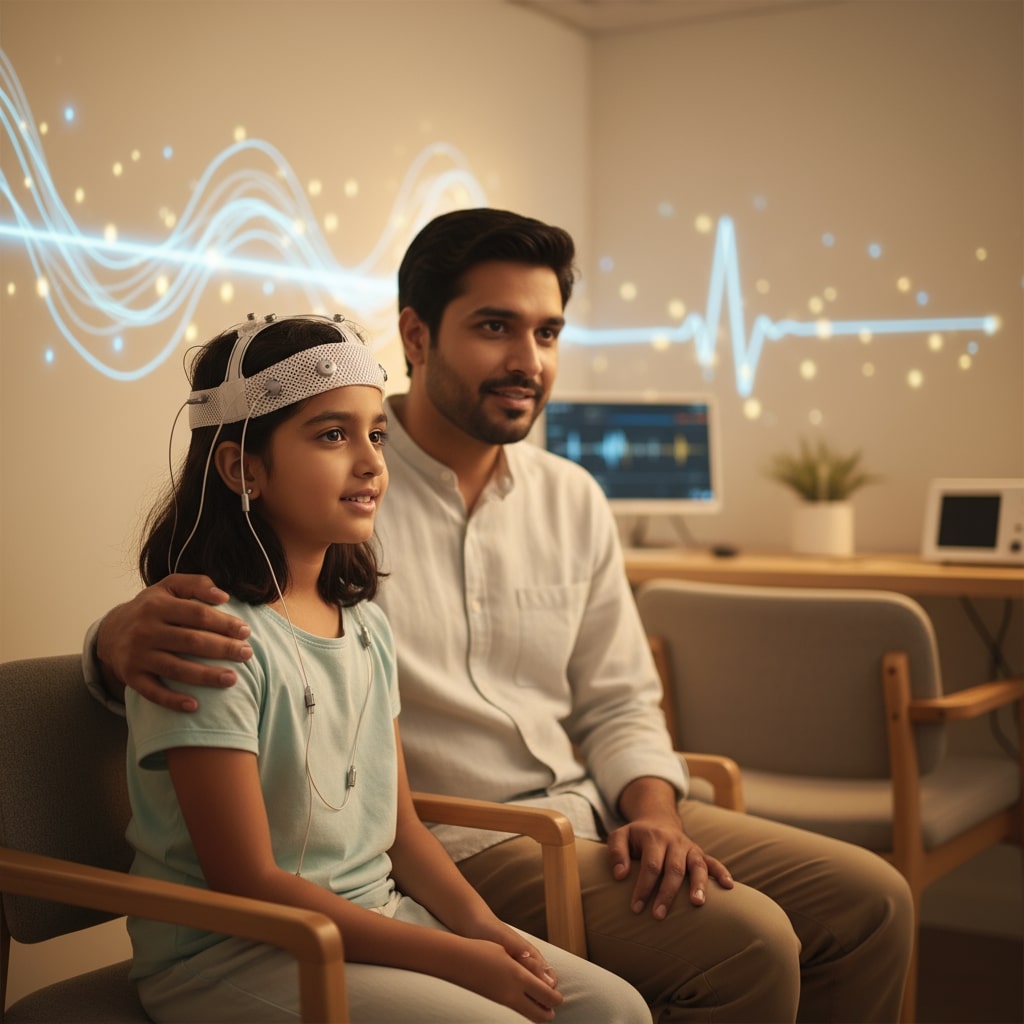
This is where neurofeedback comes in. It’s the most widely used form of neurotherapy. Tiny, non-invasive sensors are placed on your scalp - no shocks, no pain. These sensors record your brain's electrical activity in real time. This information is then translated into something you can see or hear, like a visual graph. As you engage with the screen, your brain starts to learn what it needs to do to get a reward. When your brain produces the desired brainwave patterns, the game starts, or the music plays. When it doesn't, the game stops, or the music fades. Through this process of positive reinforcement, your brain is, at a subconscious level, "rewarded for good behaviour." It’s an active training process, not a passive neurotherapy treatment. Over time, your brain learns to self-regulate and maintain more optimal patterns.
How Does Neurotherapy & Neurofeedback Differ From Psychotherapy?
Psychotherapy focuses on thoughts, emotions, and behaviours through conversation and cognitive strategies. It's talk-based therapy where you work with a therapist to understand and modify thinking patterns. Brilliant for addressing deep-seated emotional issues and developing coping mechanisms.
Neurotherapy, on the other hand, works directly with brain wave patterns. You're training your brain at the physiological level. Many practitioners actually combine both approaches.
Where You'll Find Neurotherapy & Neurofeedback Being Used
Neurotherapy treatments are seen in hospitals, psychiatry clinics, child development centres, and even wellness programmes for stress management. Parents often explore it for children with ADHD, while adults seek it for anxiety, depression and other mental health concerns.
Medical settings use neurotherapy as a complementary treatment for various neurological conditions. It's not replacing traditional psychiatry or psychotherapy; however, it works alongside it quite effectively.

Find Psychiatrics who can Help you with Neurotherapy
Understand if you need Neurotherapy or Psycho-Therapy can be equally effective for You
_Landscape_4K_hero_ba.jpg?alt=media&token=3eaa7895-6137-4224-9f47-a0f7a0c2390b)
The Wide-Ranging Benefits, Uses, And Applications Of Neurotherapy Treatment In Mental Health
Neurotherapy is not limited to treating mental health conditions; it extends into neurological care and rehabilitation.
1. Mental Health Benefits
- Mood Regulation: Helps manage depression, bipolar disorder, and emotional instability.
- Anxiety Reduction: Trains the brain to lower hyperarousal and physiological stress responses.
- Trauma & PTSD Recovery: Supports regulation of overactive fear and stress circuits.
- OCD Management: Helps rebalance rigid thought loops and compulsive behaviours.
- Addiction & Habit Control: Reduces cravings and strengthens impulse control.
2. Cognitive & Learning Enhancements
- Improved Focus & Attention: Particularly effective for ADHD and attention deficits.
- Memory Support: Strengthens both short-term recall and long-term consolidation.
- Faster Cognitive Processing: Enhances problem-solving, comprehension, and decision-making.
- Academic Performance: Students often experience better learning efficiency and exam performance.
3. Neurological & Developmental Applications
- Autism Spectrum Support: Improves sensory integration, social awareness, and communication.
- Sleep Disorders: Encourages healthy sleep rhythms, deeper rest, and reduced insomnia.
- Epilepsy & Seizure Reduction: In some cases, neurofeedback protocols help decrease seizure frequency.
- Stroke & Brain Injury Rehabilitation: Supports recovery of motor skills, attention, and memory.
- Neurodegenerative Conditions: May aid in slowing decline in dementia, Parkinson’s, or Alzheimer’s by improving brain plasticity.
4. Stress & Lifestyle Benefits
- Stress Management: Builds resilience by teaching the brain to shift into calmer states.
- Emotional Regulation: Reduces reactivity to daily challenges, promoting calm and balance.
- Sleep Quality: Many clients report falling asleep faster, staying asleep longer, and waking up more refreshed.
- Resilience & Energy: Overall improvement in day-to-day mental stamina and well-being.
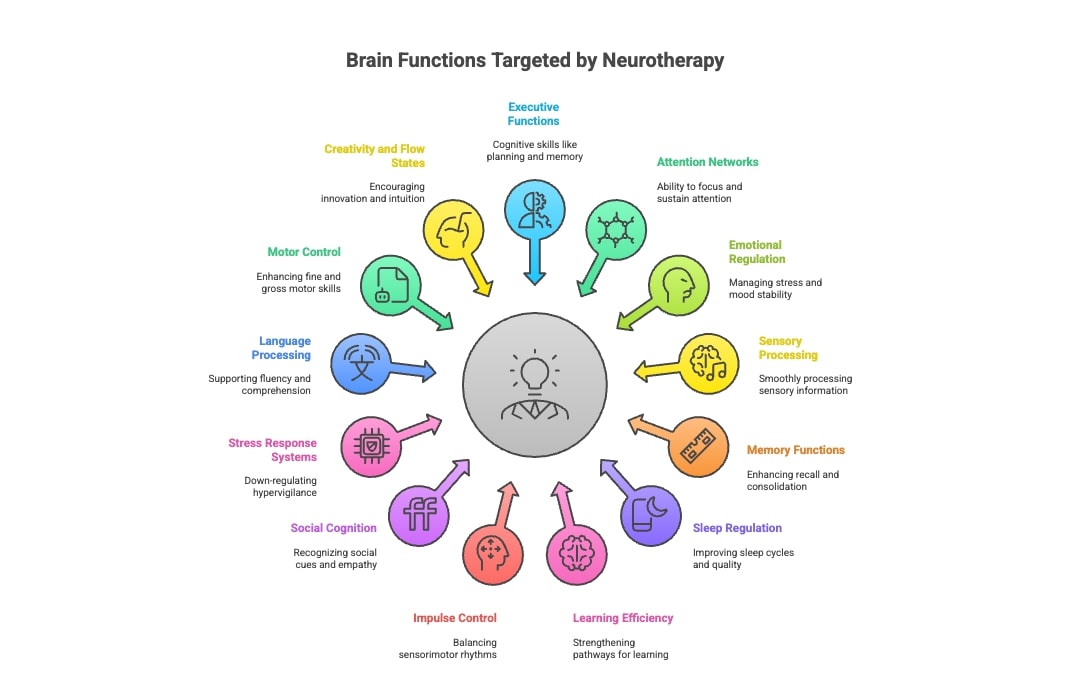
Specific Brain Functions That Neurotherapy & Neurofeedback Can Target
- Executive Functions: Working memory, cognitive flexibility, planning, and inhibitory control.
- Attention Networks: Focused attention, sustained attention, and divided attention.
- Emotional Regulation: Calming overactive stress circuits and improving mood stability.
- Sensory Processing: Helping the brain process visual, auditory, and tactile information more smoothly.
- Memory Functions: Enhancing short-term memory, long-term recall, and memory consolidation.
- Sleep Regulation: Supporting healthy sleep-wake cycles and improving sleep quality.
- Learning Efficiency: Strengthening brain pathways involved in reading, comprehension, and problem-solving.
- Impulse Control: Reducing impulsivity by balancing sensorimotor rhythms.
- Social Cognition: Improving recognition of social cues and empathy responses, especially in autism.
- Stress Response Systems: Teaching the brain to down-regulate hypervigilance and improve resilience.
- Language Processing: Supporting fluency, comprehension, and verbal recall.
- Motor Control and Coordination: Enhancing fine and gross motor skills through sensorimotor training.
- Creativity and Flow States: Encouraging alpha-theta balance to boost innovation and intuitive thinking.
Neurotherapy’s Application & Effectiveness In Mental Health Treatment
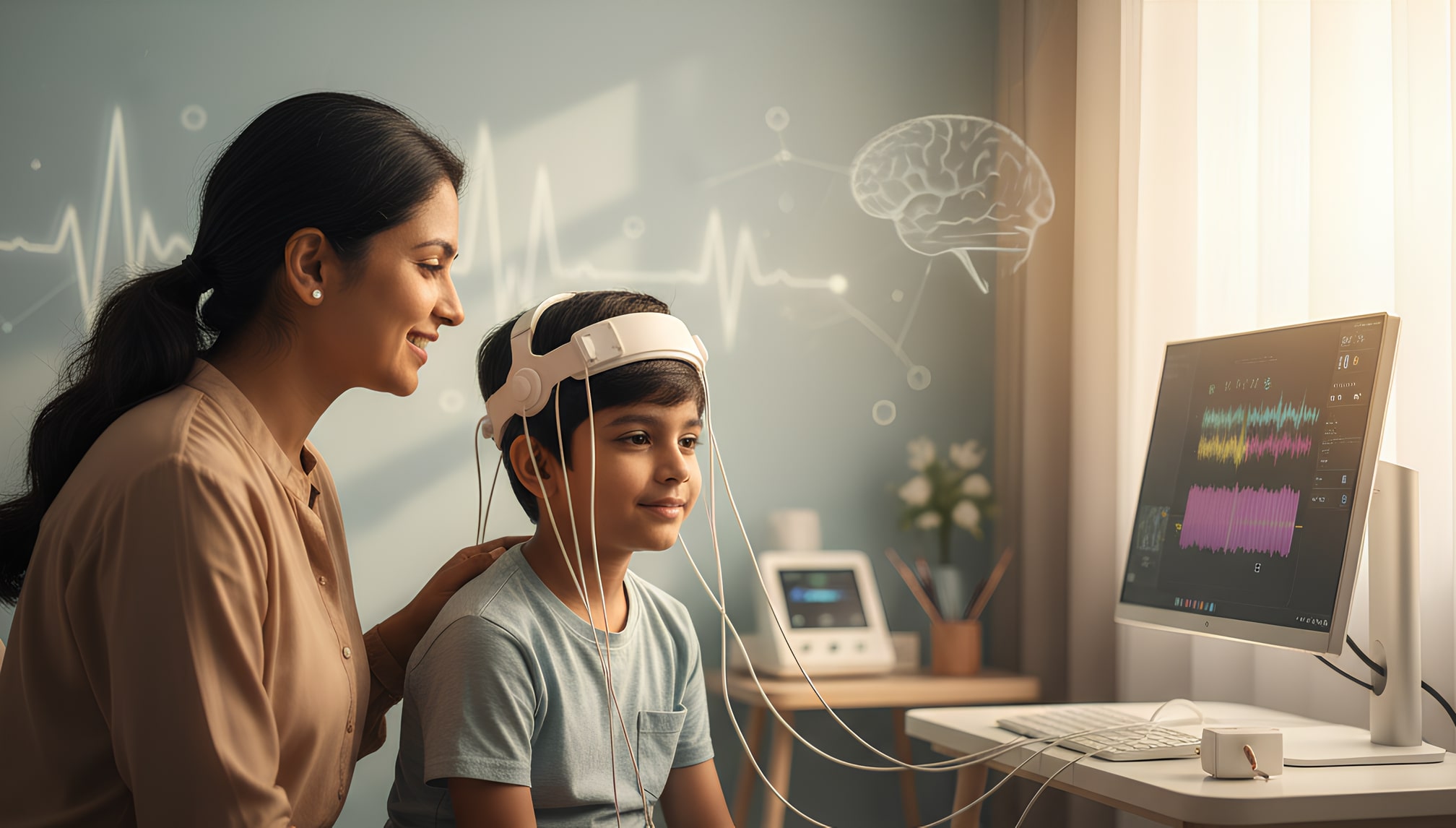
Mental health treatment in India has traditionally relied heavily on medication and talk therapy. Neurotherapy focuses directly on the brain’s activity and teaches it to function in healthier patterns through positive reinforcement and feedback.
Anxiety Disorders
For anxiety, neurotherapy can be particularly effective because it addresses the physiological component. When the brain learns to produce calmer wave patterns, the racing thoughts and physical sensations like a pounding heart or restlessness naturally reduce. Many people describe it as finally feeling “settled” in their own body.
Depression
Depression treatment benefits from neurotherapy’s ability to strengthen mood-regulating brain networks. By training underactive regions of the brain to engage more consistently, individuals often report improved energy, motivation, and emotional balance. It doesn’t always replace antidepressants, but it can make them work more effectively.
Attention-Deficit/Hyperactivity Disorder (ADHD)
Children and adults with ADHD often show irregular brainwave activity linked to poor attention and impulsivity. Neurotherapy helps stabilise these patterns, improving focus, reducing hyperactivity, and supporting better self-control.
Obsessive-Compulsive Disorder (OCD)
OCD involves overactive brain circuits that get “stuck” in repetitive loops. Neurotherapy teaches the brain to shift away from these rigid patterns, allowing more flexibility in thought processes. Over time, this can reduce the intensity and frequency of obsessive thoughts and compulsive behaviours.
Bipolar Disorder
In bipolar disorder, the brain struggles with regulating extreme shifts in mood and energy. Neurotherapy supports greater stability by promoting balanced brainwave patterns, which may reduce the intensity of manic highs and depressive lows.
Schizophrenia
Schizophrenia is complex, but research suggests neurotherapy may help with managing attention, working memory, and emotional regulation. By calming overactive brain regions and supporting underactive ones, some individuals experience fewer disorganised thoughts and a greater sense of clarity.
Psychosis
Psychotic symptoms often arise from dysregulated brain networks that misinterpret signals. Neurotherapy protocols aim to reduce these irregularities, helping individuals feel more grounded and connected to reality. When combined with medical treatment, it may lessen the frequency and severity of psychotic episodes.
Post-Traumatic Stress Disorder (PTSD)
PTSD and trauma responses often improve as the brain learns to regulate its stress response systems more effectively. The hypervigilance and exaggerated startle response that characterise PTSD can be reduced through specific neurofeedback training protocols, allowing individuals to feel safer and more in control.
Sleep Disorders
Irregular brainwave patterns often disrupt healthy sleep cycles. Neurotherapy helps retrain the brain to enter restorative sleep states more consistently, improving both sleep quality and duration. People with insomnia or frequent night awakenings often notice better rest after a few sessions.
Autism Spectrum Disorders (ASD)
In autism, the brain often shows unusual connectivity and regulation patterns. Neurotherapy helps encourage calmer, more organised activity, which can improve social engagement, reduce emotional outbursts, and support learning.
Different Types Of Neurotherapy Approaches
Neurotherapy isn’t just one method. Over the years, scientists and clinicians have developed several techniques, each targeting different functions of the brain.
EEG Neurofeedback (Brainwave Training)
This is the classic form of neurotherapy where brain activity is monitored through an EEG. Real-time biofeedback is given to the brain, helping it learn to adjust specific brainwave patterns. It’s often used for conditions like ADHD, anxiety, and sleep problems.
QEEG-Guided Neurotherapy (Brain Mapping)
Quantitative EEG or brain mapping provides a detailed picture of brainwave activity before starting treatment. With this data, therapists can create personalised protocols that match an individual’s unique brain patterns, making therapy highly precise and tailored.
Low-Frequency Neurofeedback
This approach focuses on very slow brain rhythms that standard EEGs often overlook. It’s particularly helpful for complex cases like autism spectrum conditions, developmental delays, or severe ADHD, where deeper regulation is needed.
Alpha-Theta Training
This method blends deep relaxation (alpha waves) with creative, intuitive states (theta waves). It’s often used for stress reduction, trauma recovery, and even enhancing creativity or performance in athletes and artists.
HEG Neurotherapy (Hemoencephalography)
Instead of brainwaves, HEG tracks blood flow changes in the brain. Encouraging healthier circulation in targeted areas, it can help with migraines, attention issues, and emotional regulation.
LORETA Neurofeedback
A more advanced technique, LORETA (Low Resolution Electromagnetic Tomography) neurofeedback, allows training of deeper brain structures, not just the surface. It’s often used in research and clinical settings for complex mental health conditions like PTSD or epilepsy.
NIRS-Based Neurofeedback
Functional Near-Infrared Spectroscopy uses light to measure oxygen levels in the brain. It’s non-invasive and allows therapists to monitor brain activity related to attention, planning, and emotional control, making it promising for cognitive rehabilitation.
What Happens During A Neurotherapy Treatment Session
So, what should you expect if you decide to try a neurotherapy treatment? You'll arrive at the clinic and settle into a comfortable chair. The technician will attach small sensors to your scalp. These sensors are connected to an EEG machine and a computer with specialised software. These sensors monitor your brainwave activity, which appears on a computer screen. You might watch a movie, play a simple computer game, or listen to music. Here's the clever part: the feedback (movie clarity, game responsiveness, or music volume) changes based on your brain activity.
When your brain produces the target patterns, the feedback becomes more pleasant or engaging. When it drifts away, the feedback becomes less rewarding. Your brain naturally learns to maintain the optimal patterns.
Sessions typically last 30-45 minutes. Most people find them quite relaxing, almost meditative. Some even fall asleep during sessions, which is perfectly fine.
You'll usually need multiple sessions to see lasting changes. Most protocols involve 15-40 sessions, depending on your specific goals and how quickly your brain responds to training. After initial sessions that can be weekly or bi-weekly, you will be moved to monthly or bi-monthly sessions depending on your response to the sessions.

Explore Neurotherapy with Expert Guidance
Curious about neurofeedback and brain-based treatments? Talk to our mental health coaches to understand how neurotherapy works and whether it’s right for your brain health goals.
Frequently Asked Questions
Can neurotherapy help with exam anxiety and academic performance?
Absolutely! Neurotherapy is particularly effective for exam anxiety and academic performance issues. It helps train the brain to maintain calm, focused states during stressful situations like exams. Students often report improved concentration, better memory retention, and reduced test anxiety after neurotherapy sessions.
How long does it take to see results from neurotherapy treatment?
Most people begin noticing subtle changes within 3-5 sessions, though significant improvements typically emerge after 8+ sessions. Children often respond faster than adults, sometimes showing improvements within 3-4 sessions. Factors affecting response time include the specific condition being treated, individual brain patterns, consistency of sessions, and overall health. Some benefits, like improved sleep, may appear quickly, whilst complex issues like ADHD may require 20+ sessions for optimal results.
Are there any side effects or risks associated with neurotherapy?
Neurotherapy is considered extremely safe with minimal side effects. The most common temporary effects include mild headache or fatigue immediately after sessions, which usually resolve within a few hours. Some people experience vivid dreams or slight mood fluctuations during the initial training period as their brain adjusts. Unlike medications, neurotherapy doesn't cause dependency or long-term adverse effects. However, it's important to work with certified practitioners and inform them about any existing medical conditions.
Can neurotherapy be combined with meditation or other traditional practices?
Yes, neurotherapy can be combined safely with traditional practices like meditation, yoga, and pranayama. Many Indian centres specifically integrate these approaches, as they complement each other perfectly. Meditation enhances the brain's capacity for sustained attention, which supports neurotherapy training. Similarly, neurotherapy can deepen meditative states by training specific brainwave patterns associated with mindfulness. This combined approach is particularly effective and culturally relevant for Indian patients seeking holistic wellness solutions.