

Amaha / / / Understanding the Difference Between Psychosis and Neurosis: Science, Symptoms, Causes & Treatments
ARTICLE | 5 MINS READ
Understanding the Difference Between Psychosis and Neurosis: Science, Symptoms, Causes & Treatments
Published on
12th Jun 2026

Dr Vani Kulhalli
MD Psychiatry

The concepts of Neurosis and Psychosis were used to classify mental disorders in the early part of the 19th century. These concepts are still useful in certain contexts and are worth understanding.
The core distinction between psychosis and neurosis lies in their relationship with reality.
What Exactly Are Psychosis and Neurosis?
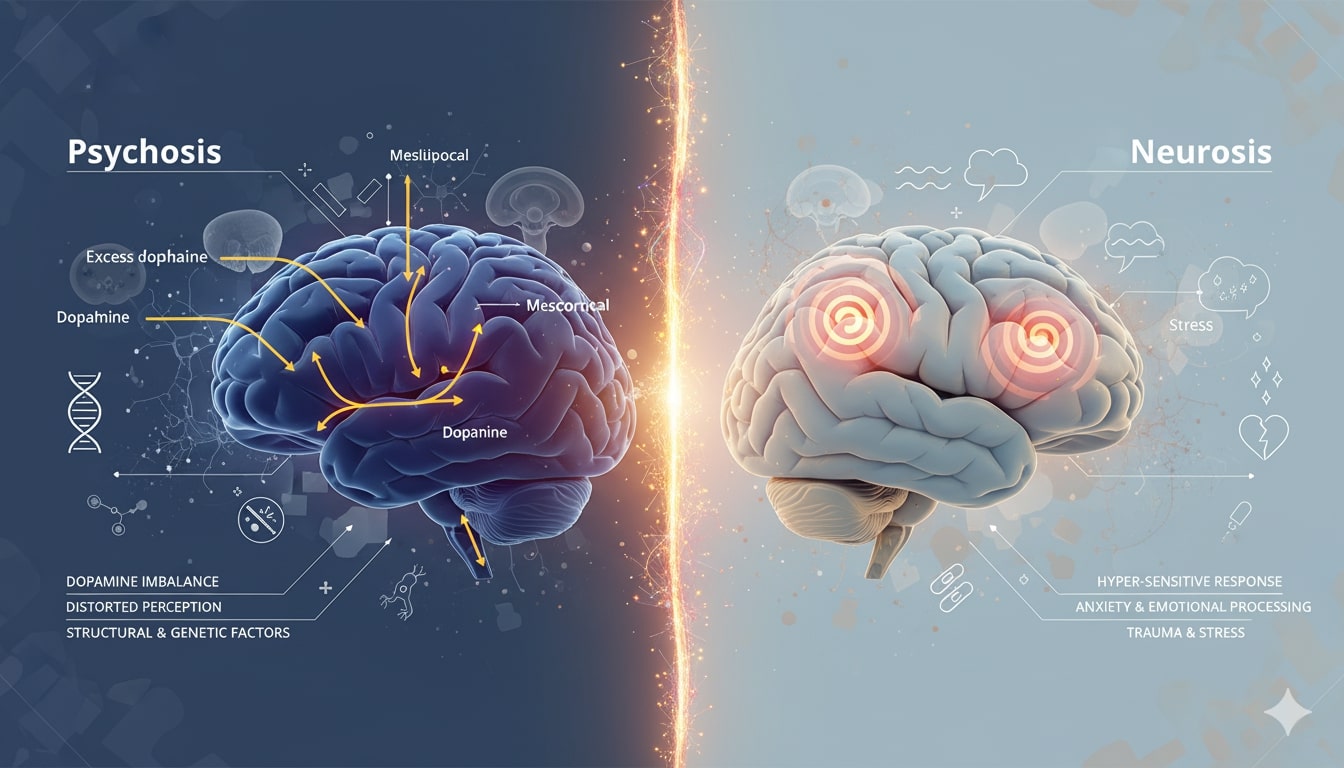
Psychosis refers to a severe mental state where a person loses touch with reality. Hallucinations, delusions, and disorganised thinking are common symptoms of psychosis. Imagine feeling convinced of something others can't see or hear.
Neurosis involves emotional distress like severe depression, anxiety, phobias, or obsessive behaviours while still knowing what's real. Someone with neurosis may feel paralysed by constant worry, but they usually know their fears are exaggerated.
Neurosis involves emotional distress, anxiety, and irrational fears, but individuals maintain their grip on reality. They know something's wrong, even if they can't control their responses.
Psychosis, however, represents a fundamental break from shared reality. People experiencing psychosis may see or hear things that others don't. They hold beliefs that are not in keeping with their education or intelligence and are not shared by the culture they come from.

Connect with Experts dealing with Psychotic & Neurotic Disorders
93% Felt Better in 4+ Sessions after Amaha's Integrated Collaborative Care
Recognising the Symptoms: Neurosis vs Psychosis
Symptoms of Psychosis
- Hallucinations (seeing, hearing, or feeling things others don't)
- Delusions (fixed false beliefs)
- Disorganised thinking and speech
- Bizarre or inappropriate behaviour
- Loss of insight (not recognising symptoms as abnormal)
- Social withdrawal and functional decline
Symptoms of Neurosis
- Persistent anxiety and worry: Feeling on edge, restless, and constantly worried about things, big or small.
- Obsessive thoughts and compulsive behaviours: Repetitive, unwanted thoughts and a need to perform certain rituals to relieve anxiety.
- Physical symptoms like a racing heartbeat, sweating, or trembling, as well as headaches, stomach issues, and chronic fatigue with no clear medical cause.
- Phobias that seem irrational but feel very real.
- Sleep disturbances and concentration problems.
- Emotional outbursts or mood swings.
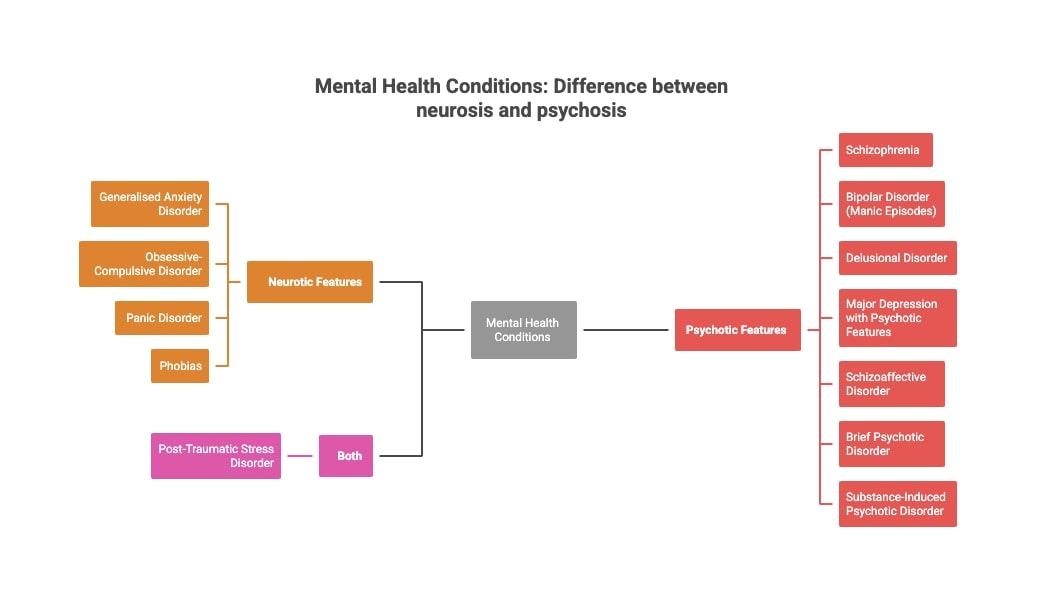
Current Understanding of the Difference Between Psychosis and Neurosis
Earlier, it was thought that neuroses were less severe than psychoses. However, over the last 50 years, it has been established that both types of disorders cause comparable suffering and disability and require equally intensive treatment, consisting of both medication and psychotherapy. Both disorders result from a combination of genetic, environmental, and social vulnerability factors. Reality testing may be impaired in neurosis, whereas persons with psychosis who have undergone treatment are able to recognise their symptoms as arising from their condition rather than as real.
These terms, being very old, have now entered lay vocabulary and are unfortunately being used in a pejorative way to stigmatise people.
The correct, scientifically informed approach is therefore to steer clear of these outdated terms and use standard classifications such as the ICD-11 (WHO, 2018) or DSM-5 (APA).

How Therapy and Psychiatry Work Together
Therapy provides space to process fears and learn coping skills. Psychiatry steps in when medication and medical supervision are needed. In India, an integrated approach, where therapists, psychiatrists, and families work together, has shown better outcomes.
Why Early Intervention Matters
Early signs of psychosis or neurosis can look like "normal stress" or "quirky behaviour." However, waiting can worsen the illness, making treatment harder. Early help means better recovery, fewer relapses, and less stigma.
In India, unfortunately, families often wait until symptoms become severe before seeking help. Cultural stigma and lack of awareness contribute to delayed treatment. But times are changing — more families now recognise that seeking help shows strength, not weakness.

Need help deciding your next step?
Talk to a trained clinical coach to understand what you’re experiencing and explore suitable mental health care support options.
Frequently Asked Questions
Is neurosis a serious mental illness?
Neurosis involves distressing symptoms but maintains reality contact. It is now established that neurosis can be as severe as psychosis; it significantly impacts quality of life and requires professional treatment for optimal recovery.
Can stress alone cause psychosis in healthy individuals?
Acute and severe stress, or prolonged and unrelenting stress, can cause psychosis in vulnerable individuals. Substance use is a known toxic stress factor that can precipitate psychosis.
Are neurotic people more intelligent than average?
Intelligence does not correlate with neurosis. However, highly intelligent individuals may overthink situations, potentially increasing anxiety. Neurosis affects people across all intelligence levels equally.
How long does psychosis last without treatment?
Untreated psychosis can persist for months or years, often worsening over time. Early intervention significantly improves outcomes. Some brief psychotic episodes resolve naturally within days to weeks.
Can yoga and meditation cure neurosis completely?
While yoga and meditation can significantly help manage neurotic symptoms and reduce stress, they are best used alongside professional therapy rather than as standalone treatments for clinical conditions.
How can I support a friend with neurosis or psychosis?
The best approach is to be patient, non-judgmental, and understanding. Encourage them to seek professional help without pressuring them. Listen without trying to fix their problems, and help them find a professional who can provide expert care.
Can a person with psychosis be functional in society?
With the right combination of medication, therapy, and social support, many people with a history of psychosis live fulfilling lives. Treatment helps manage symptoms, allowing them to work, maintain relationships, and pursue their passions. However, treatment must be started as soon as possible — the longer the duration of untreated psychosis, the lower the probability of a good recovery.