

Amaha / / / Coping with Severe ADHD in Adulthood: Strategies for Managing Impulsivity and Focus Challenges
ARTICLE | 8 MIN MINS READ
Coping with Severe ADHD in Adulthood: Strategies for Managing Impulsivity and Focus Challenges
Published on
3rd Apr 2026

Harsiddhi Thakral
M Phil In Clinical Psychology
.jpg%3Falt%3Dmedia%26token%3Da1fccce7-9375-4a35-8bf4-e68ab916399d&w=1920&q=75)
Imagine having a list of tasks to do, multiple deadlines to meet, but you get distracted by your messy work desk, and you spend half a day cleaning, even though you knew it wasn’t a priority at that moment. Many adults with severe ADHD have similar experiences.
Overcoming ADHD challenges in adulthood can be difficult, almost daunting, and can often make everyday tasks and activities feel overwhelming. Fortunately, there are various ADHD management techniques you can implement in your daily life to help you feel more empowered and in control of impulsive behaviour. We will examine what adult ADHD is and explore strategies for managing impulsivity and focus challenges.
What Does ADHD Look Like in Adults?
ADHD or Attention-Deficit/Hyperactivity Disorder is a mental health condition that usually develops in childhood and persists into adulthood, leaving a significant impact on a person’s life. Managing ADHD in adulthood can pose various challenges, such as persistent patterns of inattention and/or hyperactivity and impulsivity that make it difficult to function in at least two areas of life, such as at home, school, or work and can even affect relationships. .
How Do Adults with Severe ADHD Cope?
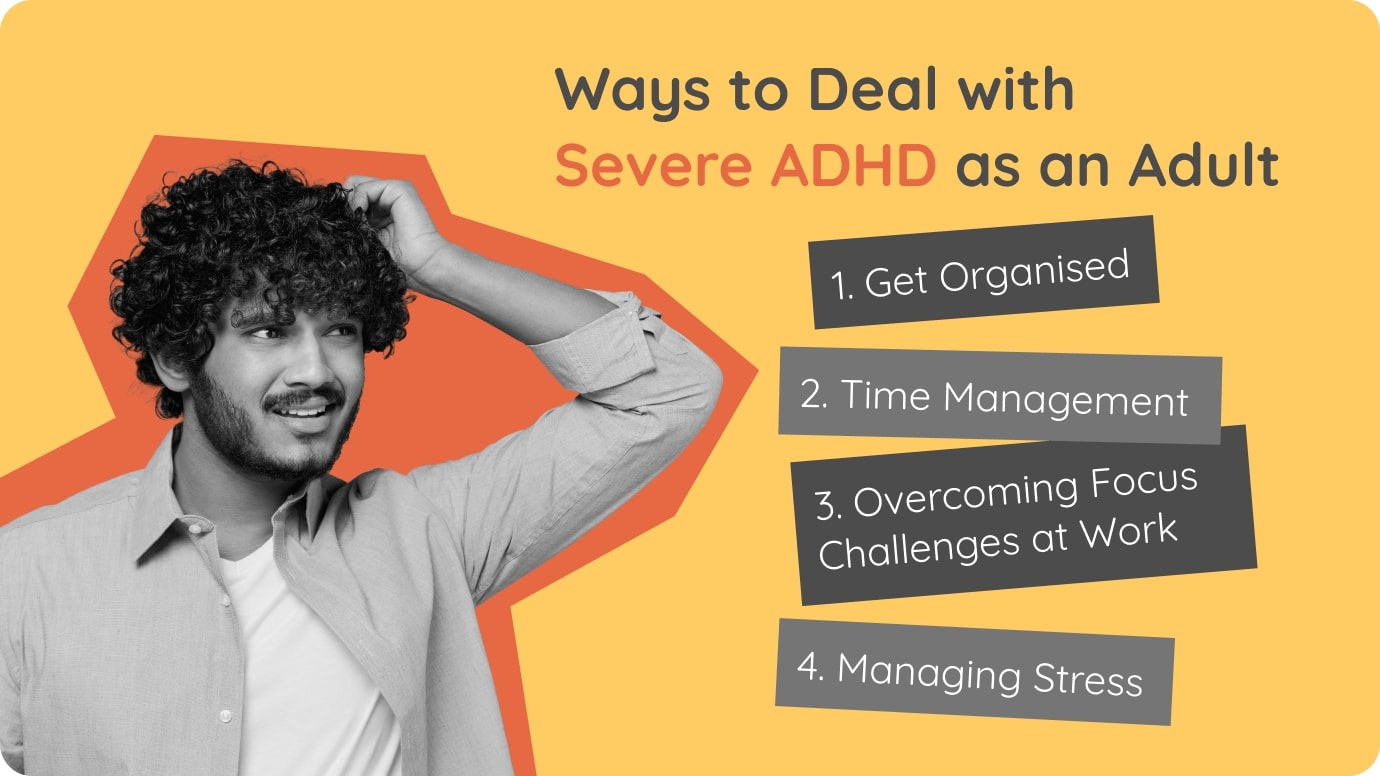
1. Get organised
For many adults with ADHD, staying organised at home or work can feel like a constant struggle. Breaking tasks into smaller, manageable steps and using structured planning approaches can make the organisation feel more achievable.
Helpful approaches include:
- Using SMART style goals by breaking large, vague goals into specific, measurable, achievable, relevant, and time-bound actions
- Simplifying routines by starting very small, such as clearing one drawer, shelf, or section of a workspace at a time
- Using tools such as planners, digital calendars, to-do apps, and reminder systems to track tasks, deadlines, and appointments
- Decluttering intentionally by focusing on essential items and letting go of things that add visual clutter and decision fatigue
By taking small and consistent steps rather than aiming for perfection, it becomes easier to create structure and feel more in control of your environment.
2. Time management
ADHD can significantly affect time perception and planning. This often leads to procrastination, missed deadlines, or periods of intense hyperfocus on one task while neglecting others. Managing time more effectively requires realistic planning, external structure, and flexibility.
Useful strategies include:
- Planning for spillovers by accepting that tasks may take longer than expected and setting realistic expectations for starting and completing them
- Breaking down tasks into smaller, actionable steps and assigning specific time slots to each step
- Using timers and buffers through time blocking, alarms, or structured work intervals, while allowing extra time before and after tasks
- Learning to say no by reviewing your schedule before committing to new responsibilities can help prevent overload and impulsive decision-making
These time management strategies are commonly recommended in clinical and coaching settings for adults with ADHD and work best when combined with therapy or medication.
3. Overcoming focus challenges at work
Managing ADHD in the workplace can be particularly challenging due to constant demands, open plan environments, and digital distractions. Creating a structured and supportive work environment can make focusing on and completing tasks more manageable.
Practical strategies include:
- Structuring the workspace by spending a few minutes each day tidying your desk, using colour coding, folders, and clear task lists, and prioritising key tasks
- Minimising distractions by working in quieter areas where possible, keeping the workspace clutter-free, using noise-cancelling headphones, and silencing non-essential notifications
- Externalising thoughts by writing down ideas or unrelated tasks for later, instead of allowing them to interrupt current work
- Adjusting meeting habits by requesting materials in advance, repeating key points aloud, taking brief movement breaks, and using notes or checklists during meetings
In some cases, workplace accommodations such as flexible seating, written instructions, or adjusted deadlines may be available and can be particularly helpful for adults with significant ADHD symptoms.
4. Managing stress
ADHD related impulsivity and disorganisation can affect sleep, eating habits, and physical activity levels, which may increase stress and contribute to mood fluctuations. Small and consistent changes in daily routines can help stabilise energy levels, improve emotional regulation, and make ADHD symptoms easier to manage.
Evidence-informed lifestyle strategies include:
- Regular exercise, especially activities you enjoy and can maintain consistently, is associated with reduced ADHD symptoms, lower stress, and improved sleep
- Relaxation practices such as yoga, mindfulness, and meditation, which can support focus and emotional balance when practised regularly
- Improving sleep habits by avoiding caffeine later in the day, maintaining a consistent sleep routine, reducing screen time before bed, and creating a calming bedtime routine
- Balanced nutrition through regular meals with adequate protein and reduced refined sugar intake to support concentration and stable energy
These lifestyle strategies should be viewed as supportive measures that complement medical and psychological treatment, rather than as stand-alone solutions for severe ADHD.
Living with Severe ADHD: Common Questions Answered
Like with any mental health condition, living with Adult ADHD is a unique experience for every individual. While it impacts people differently, here are some of the most common questions that adults with severe ADHD have.
Q1. What are the signs of ADHD in adults?
There are various signs of ADHD. They include:
- Persistent difficulty focusing
- Trouble concentrating on tasks
- Easily distracted
- Frequent mind wandering
- Hyperactivity and impulsivity
- Restlessness and fidgeting
- Impulsive behaviour
- Organisational challenges
- Difficulty planning and prioritising tasks
- Poor time management skills
- Forgetfulness
- Emotional dysregulation
- Impatience
- Frustration
- Difficulty managing stress and emotions
Q2. Can an adult with ADHD live a normal life?
Yes, absolutely. With the right strategies and support, adults with ADHD can lead very fulfilling lives.
Q3. How do I get a diagnosis for Adult ADHD?
To get a diagnosis, you'll need to consult with a mental health professional who specialises in ADHD. The assessment typically includes a detailed clinical interview, standardised questionnaires, a review of childhood history, and screening for co-occurring conditions.
Q4. What lifestyle changes can help manage ADHD symptoms?
Along with all the tips mentioned above, a healthy lifestyle, including regular exercise, a balanced diet, and adequate sleep, can significantly improve ADHD symptoms.
Q5. Is ADHD treatable in adults?
Yes, ADHD is treatable in adults. Treatment plans often involve a combination of medication, therapy, and lifestyle changes.
If you want to learn more about how to deal with severe ADHD as an adult, reaching out to a mental health professional can be a helpful step. They can offer personalised support, including therapy, medication, and practical advice to guide you through the process.
You can read more about the benefits of Cognitive Behavioural Therapy in ADHD here.
Managing ADHD in adulthood is a journey, and it’s okay to ask for help along the way. By incorporating these strategies and seeking professional support when needed, you can better manage your symptoms and work towards living a balanced and fulfilling life. You’re not alone in this, and there’s always support available when you need it.